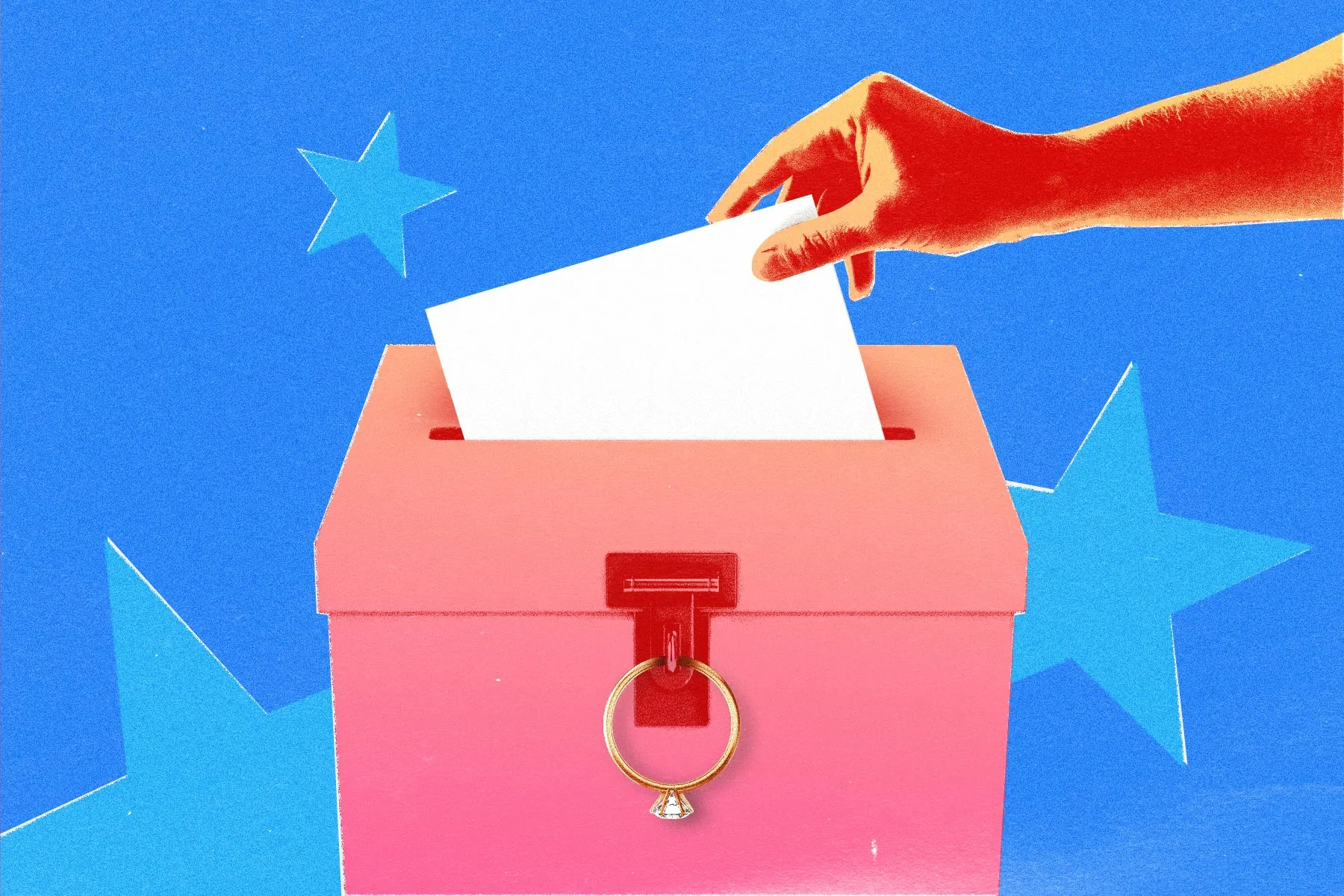
The fear of widespread voter fraud has been hammered into the American political landscape, fueled by years of misinformation and anxieties surrounding immigration and border security. Today, roughly seventy percent of Republican voters say voter fraud is one of their top concerns. The power of that belief comes not from evidence but from a politician’s most reliable weapon: fear.
The reality is very different. Between 2000 and 2025, the Heritage Foundation’s own database, an organization that has spent decades searching for fraud, identified fewer than 100 instances of non-citizen voting out of hundreds of millions of ballots cast. One hundred cases. Against that scale, the narrative of stolen elections is not a response to a problem. It is a political invention.
Yet that invention now threatens to become law. The SAVE Act, sold as a safeguard against non-citizen voting, would impose documentary proof of citizenship requirements that could disenfranchise millions of eligible Americans, particularly married women. And it would do so with just nine months until the 2026 midterm elections, in what election officials are calling a “logistic nightmare.”
The question is why.
The Blueprint
To understand why a party would invest so heavily in solving a problem that doesn’t exist, look to the influential think tanks who have spent millions building what one expert called “a Trump administration that could just elbow out pretty much the entire other side of the party.” From 2020 to 2022 alone, one think tank received $236 million in contributions. Donor networks linked to just six family fortunes funneled more than $120 million into their advisory groups.
They have been explicit about what they want. In a published document titled “Saving America by Saving the Family,” the organization laid out its vision for American women: marry early, leave the workforce, have as many children as possible, stay home, and depend financially on your husband. Contraception should be hard to get. IVF restricted. Women who deviate from this path should face social condemnation. The League of Women Voters warns this document seeks to “correlate women’s voting rights with motherhood and socially shame childless women.”
This is not a fringe document. It is a blueprint from an organization with hundreds of former staff and affiliates now serving in the administration.
The Builders
But a blueprint, no matter how detailed, does not build itself. For that, you need builders, people who know how to turn vision into law, who have drafted executive orders before the administration took office, who have offices steps from the White House and former staff now running federal agencies.
That is the America First Policy Institute.
Founded in 2021, AFPI functions less like a traditional think tank and more like a shadow government. Its leaders, Brooke Rollins, now Secretary of Agriculture; Linda McMahon, now Secretary of Education; Larry Kudlow; Chad Wolf, moved directly from AFPI into the highest levels of the Trump administration. In January 2026, the group paid $20 million for a headquarters at 14th and G Street NW, literally steps from the White House.
Their mission, in their own words, is to “relentlessly advance President Trump’s proven policies” and ensure they become a “lasting, unbreakable legacy.”
And they have been remarkably effective. AFPI claims that over 86% of their drafted policies were advanced or enacted in the first hundred days of the administration. They do not simply publish papers, they draft the actual legislation.
Consider the SAVE America Act. AFPI published a detailed bill analysis in February 2026, promoting a version of the SAVE Act that goes even further: photo ID requirements at the polling place, restricting mail ballots, prohibiting ballot harvesting. The group explicitly acknowledges that the SAVE Act is its predecessor, “nearly identical” but without some of the more aggressive provisions.
This is not a think tank observing from a distance. This is the governing machinery, acting as a shadow government, pre-positioned and activated. Behind them is the Heritage Foundation, providing the vision. AFPI provides the law. And the White House provides the pen.
The Target
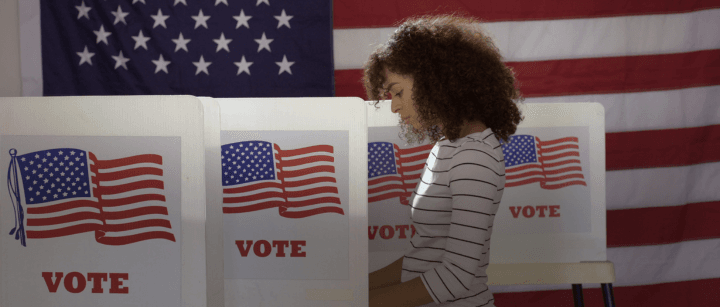
The SAVE Act cannot be understood in isolation. By requiring documentary proof of citizenship for voter registration, the law would create new barriers that would weaken the political influence of millions of voters, particularly women.
There are approximately 69 million women who have a name mismatch between their birth certificate and current ID. Out of that 69 million, an estimated 47 million are registered voters. Based on available data, an estimated 3.5 million to 4.7 million of these registered women voters would likely not vote in a midterm election if the SAVE Act’s requirements were in effect.
The political calculation is even more complex. Republican women are twice as likely as Democratic women to have changed their names after marriage, 90% of conservative women take their husband’s name, compared to roughly 70% of liberal women. If the goal were truly election integrity, this law would cut across party lines. If the goal were partisan advantage, it would be a gamble, one that could just as easily suppress conservative votes as liberal ones.
But the bet Republicans are making is different. They are gambling that the voters who lose their ability to vote under the SAVE Act will be outweighed by the voters who reward them for “doing something” about a problem that barely exists. The fraud-concerned independent in the suburbs may never need a birth certificate to vote. But seeing Republicans fight for “election integrity” signals that the party shares their values. In a close election, that signal could be worth more than the votes of the very women the law disenfranchises.
The Chaos
Political strategy collides with administrative reality. If the SAVE Act passes in spring 2026, states will have just a few months, less time than it currently takes New York to deliver a certified birth certificate, to build an entirely new voting infrastructure from scratch.
Consider what that means. In New York alone, residents report waiting nearly a year for certified birth certificates. Memory Burcalow requested hers on March 26, 2025. Nearly a year later, she still hasn’t received it.
Election officials are already warning of a “logistic nightmare.” Washington state estimates it would need at least $35.7 million to prepare for the November 2026 election, money the SAVE Act does not provide. Nationwide, the National Association of Counties estimates that 770,000 to 1.2 million poll workers and election administrators would need extensive retraining, requiring 2.5 million to 5 million additional training hours during the initial implementation cycle alone.
And this burden falls on an election system already strained to breaking. Turnover among local election officials hit 41% in 2024, the highest rate in 25 years. Federal election funding has collapsed from $825 million in 2020 to just $15 million in 2025.
The system doesn’t exist. The money doesn’t exist. The time doesn’t exist. What does exist is a deadline.
The Onslaught
And then there are the lawyers.
The moment the SAVE Act is signed into law, a coordinated coalition of states and voting rights organizations will be waiting in federal courthouses across the country. We know this because the legal battle has already begun, not over the SAVE Act itself, but over the administrative actions that would enable it.
In September 2025, the League of Women Voters, the Electronic Privacy Information Center (EPIC), and a coalition of civil rights organizations filed League of Women Voters v. DHS, challenging the Trump administration’s illegal expansion of the SAVE database. “The law is clear: no national data bank,” said EPIC’s litigation director.
The SAVE Act would face attacks on at least three fronts:
• Privacy Act / National Data Bank: The Act relies on an illegally consolidated database combining IRS, SSA, and DHS data, explicitly prohibited by the Privacy Act of 1974.
• States’ Rights / Tenth Amendment: A coalition of state attorneys general calls it an “unprecedented power grab” that nationalizes election administration and strips states of their constitutional authority.
• Disparate Impact / Voting Rights: Civil rights organizations argue it disproportionately burdens married women, people of color, low-income voters, and naturalized citizens.
Within hours of enactment, plaintiffs would file for emergency injunctions in multiple federal districts. Some judges, perhaps in blue states, would grant them, blocking the law locally. Other judges, perhaps in red states, would deny them. The Justice Department would immediately appeal, asking circuit courts to “stay” the injunctions or, conversely, to expand them nationally.
The result, as the 2026 primaries unfold and November approaches, would be a patchwork of conflicting court orders. In some states, the SAVE Act would be in effect. In others, it would be on hold. Election officials would have no idea which rules apply to which voters.
And while the lawyers argue, voters pay the price. In Texas’s March 2026 primary, months before the SAVE Act would even take effect, thousands of eligible voters were already wrongfully removed from rolls or threatened with investigation due to errors in the expanded SAVE database. Naturalized citizens, whose citizenship status hadn’t been updated in Social Security records, were flagged as noncitizens and purged.
Everyone knows where this ends: the Supreme Court. With a conservative majority, the justices may ultimately uphold the law, or strike it down. But that decision will not come in weeks or months. It will come long after the 2026 midterms are decided. And in the meantime, voters will be caught in a legal fog, unsure whether their registration counts, their ID works, or their vote will be counted.
The Many
Married women bear a unique burden under the SAVE Act, 69 million of them have name mismatches. But they are not alone.
More than 21 million American citizens lack ready access to proof-of-citizenship documents. Over 140 million do not have valid passports. Students away at college cannot easily access birth certificates stored at home. Seniors who have lost documents over a lifetime face mobility barriers to replace them. Disabled voters, who already face voting difficulties at three times the rate of non-disabled voters, rely on mail-in voting that the SAVE Act would restrict. Rural residents in places like Skykomish, Washington, face three-and-a-half-hour round trips to reach election offices. Native Americans, whose tribal IDs are currently accepted in most states, would find those IDs invalid unless they show place of birth and citizenship, which most do not.
Add these groups together, and you begin to see the scale. The SAVE Act would not simply “secure” elections. It would systematically filter out millions of eligible voters, many of whom already face the greatest barriers to participation.
The Endgame
Which brings us to November 2026. The midterms will determine control of Congress for the final two years of Trump’s presidency. If Republicans maintain their majority, or expand it, they will have a clear path to rubber-stamp whatever the president wants. No meaningful oversight. No checks. No balance.
The SAVE Act, if implemented in time, or even if merely litigated into chaos, would shape who can vote. And if enough eligible voters are caught in the confusion, the outcome is predictable. A smaller electorate. A more Republican electorate. And a Congress with no mandate to do anything but say yes.
This is the bet Republicans are making. They are betting that the fraud-concerned independent will reward them for acting. They are betting that the married women who cannot vote will blame the system, not the party. They are betting that the chaos of implementation and litigation will settle, somehow, in their favor. And they are betting that by November 2026, no one will connect the dots between a law sold as election integrity and a Congress that spends its final two years doing exactly what the president asks.
The Deeper Question
There is something else worth naming. Some of the politicians and more vocal supporters pushing the SAVE Act wrap themselves in the language of faith. They speak of protecting the country, preserving values, defending Christian tradition.
But there is nothing Christian about making it harder for the poor to vote. There is nothing Christian about building barriers for women who have done exactly what society asked, married, changed their names, built families. There is nothing Christian about a law designed to ensure that some Americans, particularly those already on the margins, simply stop showing up.
Do you have to be reminded how the Christianity of the Gospels fed the hungry, welcomed the stranger, and lifted the lowly? The Christianity waved by the architects of the SAVE Act does the opposite. It is a flag wrapped around a very different project, one that has more to do with power than faith, with control than compassion.
The Heritage Foundation laid the blueprint. AFPI built the machinery. The White House provides the pen. And together, they are constructing a country where women know their place, where the poor know their limits, where the ballot box is just difficult enough that only the “right” people bother to show up.
They wave the flag and quote the Scripture. But what they are building has nothing to do with either. It is power, naked and unadorned, dressed up in the language of faith and freedom.
The SAVE Act is not about fraud. It never was. It is about who gets to decide the next two years, and the next generation, of American life. The only question is whether enough of you will see it before it’s too late.
Sources
America First Policy Institute
Electronic Privacy Information Center (EPIC)